

Planning an epoxy flooring project involves more than measuring the size of a room. Material quantities can vary according to the coating system, application thickness, surface condition, decorative features, and project design. Calculators can provide a useful starting point by helping property owners and contractors estimate material requirements and organize project costs. However, the numbers still need to be checked against product specifications and actual site conditions. Understanding what these tools calculate can make flooring planning more practical and easier to manage.
Start With an Epoxy Cost Calculator
An epoxy cost calculator can help create an initial estimate for an epoxy flooring project. The calculation generally begins with the total area that needs to be coated.
Measure the length and width of each section and calculate the square footage. If the floor contains several irregular areas, divide them into smaller sections before adding the measurements together.
The calculator may also require information about coating coverage, thickness, product quantity, or other project details. Using accurate measurements and manufacturer specifications can make the resulting estimate more useful.
Measure the Floor Carefully
Accurate measurements are essential when calculating material requirements. A small measurement error can become more noticeable as the total floor area increases.
For simple rooms, multiply length by width. For irregular spaces, separate the floor into manageable sections and calculate each one individually.
Exclude areas that will not receive the coating, such as permanent structures or sections covered by equipment. Keeping measurements organized can make it easier to review the calculation later.
Consider Coating Thickness
Epoxy material requirements depend partly on the thickness of the coating system. Different products may have different recommended application rates and coverage levels.
A thicker application generally requires more material over the same surface area. However, thickness should be based on the product system and intended use rather than simply increasing or reducing the amount to change the estimated cost.
Always review manufacturer instructions before entering coverage information into a calculator.
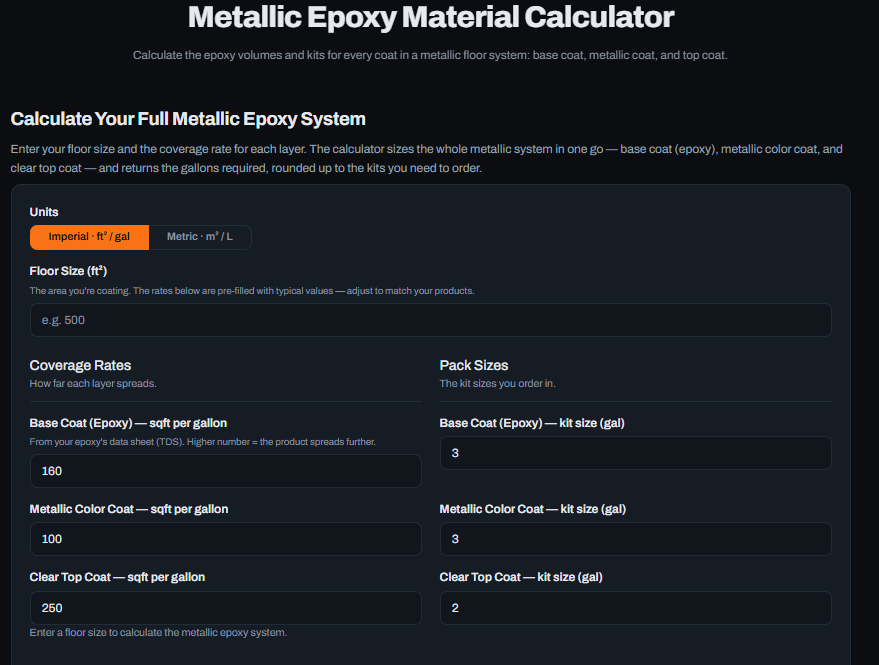
Explore Metallic Epoxy Material Calculator
A metallic epoxy material calculator can be particularly useful when planning decorative flooring that uses metallic pigments or specialized epoxy materials.
Metallic systems can involve multiple products, including base materials, metallic pigments, and protective finishes. The quantities required may depend on the floor size, application method, and selected system.
Before calculating, identify the specific products being used. Manufacturer coverage information should be used whenever possible because different materials can have different application requirements.
Include Surface Preparation
Calculators may focus primarily on coating materials, but surface preparation can also affect the overall project. Existing concrete may contain cracks, grease, stains, dust, old coatings, or other conditions requiring attention.
Grinding, cleaning, repairs, and other preparation procedures can add materials, labor, and equipment requirements.
Inspect the concrete before relying on a final estimate. A professional assessment can help identify preparation work that may not be included in a basic calculator.
Account for Decorative Materials
Decorative epoxy projects can require additional materials beyond the primary coating. Metallic pigments, flakes, borders, color combinations, primers, and topcoats can all influence the material plan.
Make a separate list of these components before calculating the complete project requirement. This prevents decorative materials from being overlooked when estimating the total amount needed.
If multiple products are being used together, verify that they are designed to work as part of the same system.
Consider Waste and Application
Calculated coverage should not always be treated as an exact amount. Mixing, application technique, surface texture, and project conditions can influence actual consumption.
Depending on the product and application, some additional material may be appropriate for planning purposes. Ask the supplier or manufacturer how the stated coverage should be interpreted.
The goal is to create a realistic estimate rather than simply using the smallest possible quantity.
Separate Materials From Labor
A calculator can help estimate materials, but the complete project cost may include several other elements. Labor, concrete preparation, repairs, equipment, transportation, and additional services can all affect the final amount.
Keep material estimates separate from installation costs. This makes it easier to understand what a calculator is actually showing and compare it with professional quotations.
A contractor can then explain differences between the preliminary estimate and the actual project requirements.
Review the Final Calculation
Before ordering materials, review the floor measurements, product specifications, coating thickness, decorative components, and estimated quantities.
If the project contains different rooms or flooring systems, calculate each area separately before combining the results.
Taking a few extra minutes to check the numbers can help prevent avoidable shortages or unnecessary purchases.
Conclusion
Cost and material calculators can make epoxy flooring planning more organized, but they work best alongside accurate measurements, manufacturer information, and professional advice. They can provide a useful starting point without replacing a site-specific assessment.
If you are planning an epoxy flooring project and want additional calculation resources, tradeepoxy.com can be explored to learn more about tools that may help estimate materials and organize your project requirements.